Jonathan VasataPorcelain, paper, light, architecture
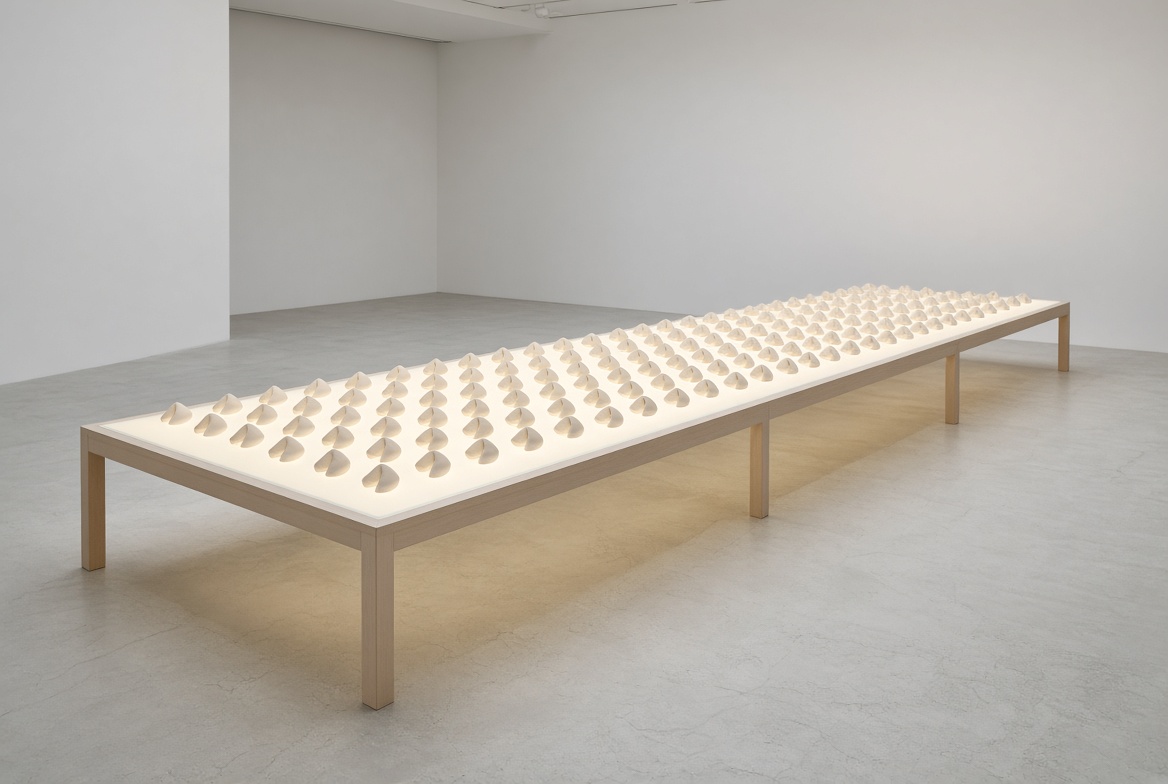
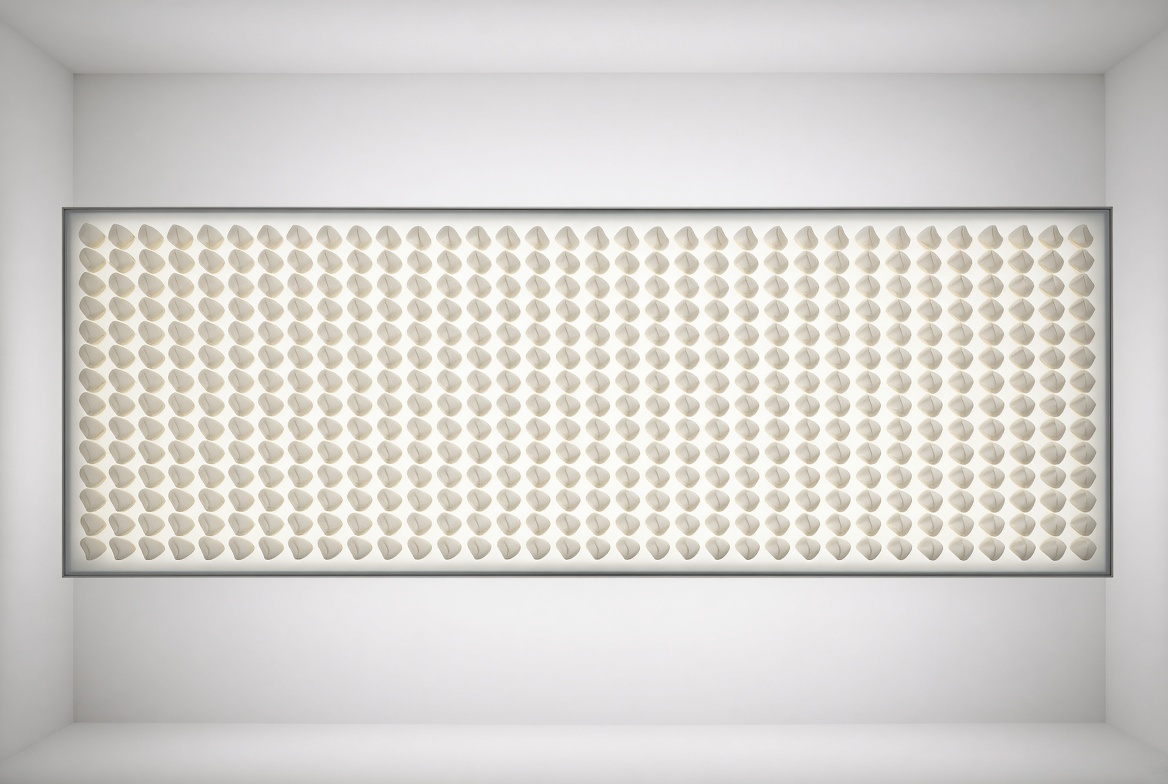
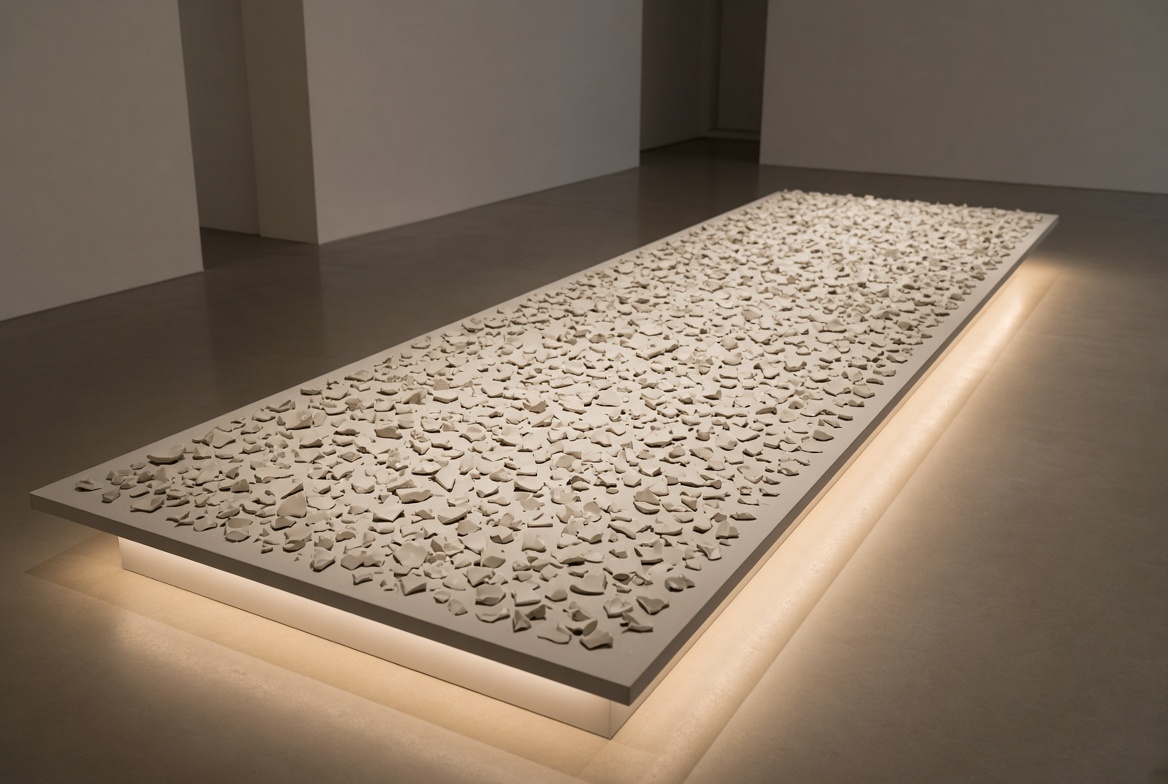
State 01 — Before. Conceptual visualization of the opening field. Approximately 1,000 intact objects. The table is waist-height. Illumination is architectural, not theatrical.
The work
A field of objects. One condition. No reset.
LOT consists of approximately 1,000 handmade porcelain fortune cookies arranged in a precise grid on a waist-height illuminated table.
Each cookie contains a unique paper fortune.
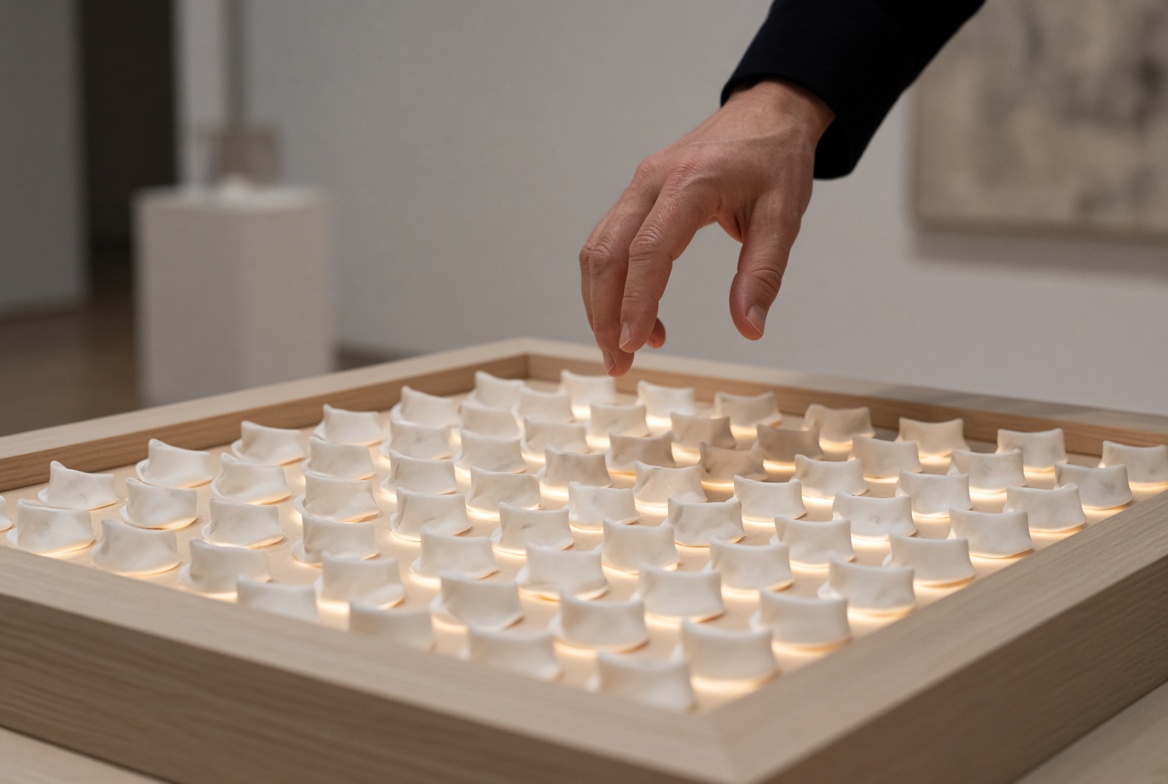
Visitors may choose one object.
By breaking this object, you agree to accept what is inside.
The visitor chooses without knowing the fortune.
They break the porcelain object in place.
They must take the fortune.
They may not take the porcelain.
The fragments remain exactly where the object was broken.
Nothing is reset during the exhibition.
Over time the installation transforms from an ordered field of intact porcelain objects into a field of fragments.
Information leaves.
Matter stays.
The object
Beautiful enough to hesitate.
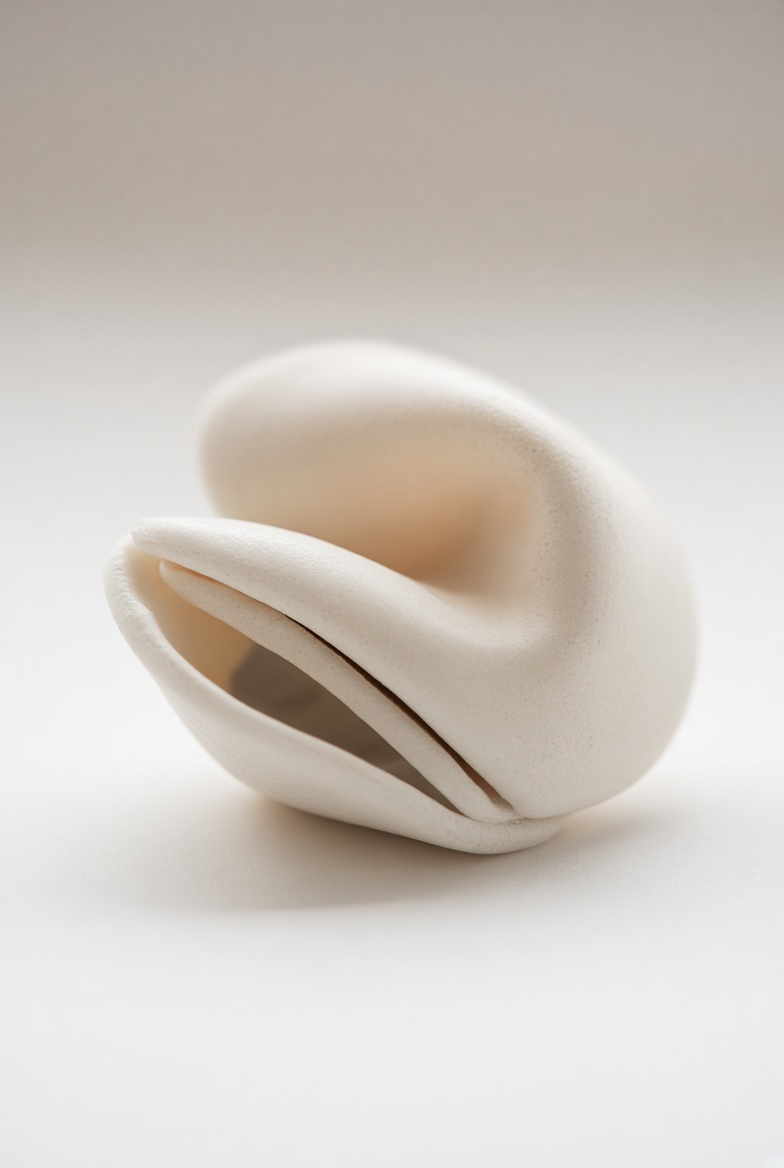
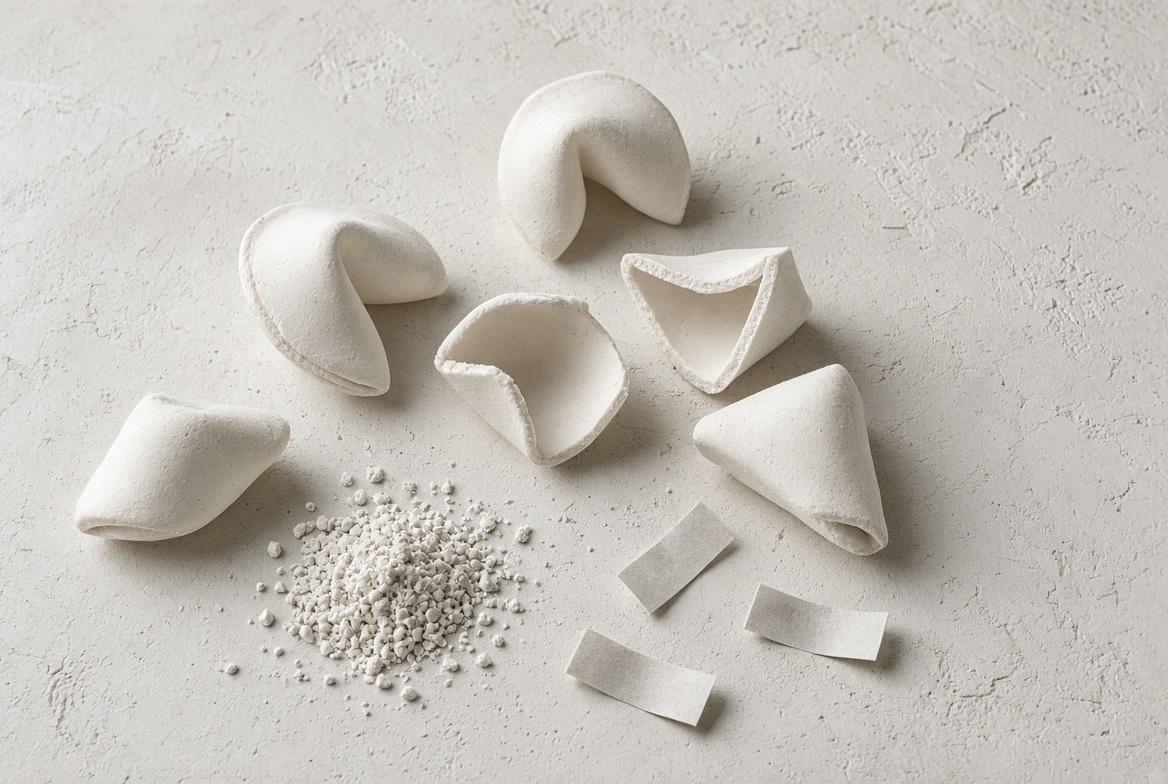
The porcelain fortune cookies are not disposable props. They are handmade ceramic objects. Their desirability is part of the work.
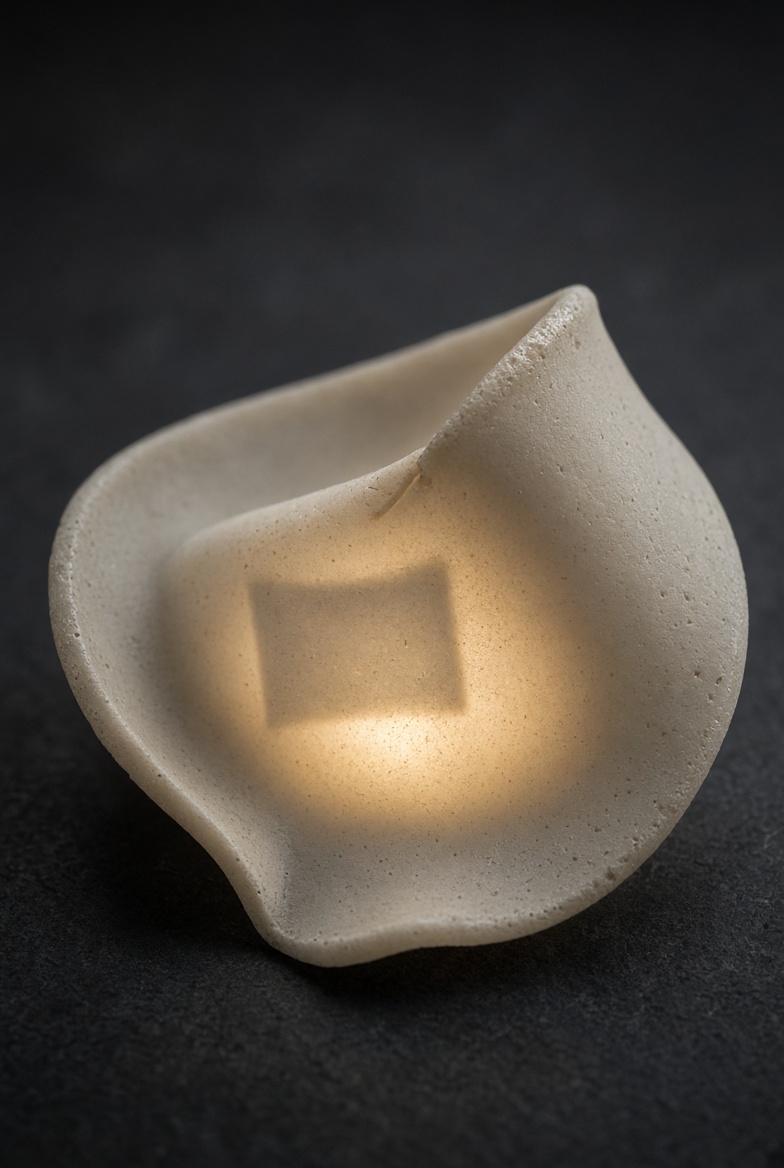
Thin porcelain can transmit light. Under the table, a restrained source makes each shell faintly luminous. A visitor may perceive that paper exists inside — its size, perhaps its orientation — without being able to read it.
Partial information is the condition of choice.
You know something is there. You cannot know what it says.
The moment before destruction is not a prelude to the work. It is the work.
Object study. The form should hold attention before it is broken.Translucency study. The paper is perceptible. It is not legible.
Hesitation. The question the object asks is not symbolic. It is practical: how badly do I want to know what is inside?
The table
Porcelain, paper, light, architecture.
A long, minimal table. Waist height. A rigorous grid.
Illumination comes from beneath a translucent plane — frosted glass, thin stone, or a similarly quiet material. The light should describe the objects, not advertise them. No color. No flicker. No product glow.
The table is a piece of furniture in a room, not a display system. Height matters because it places the objects in the register of the hands. Visitors do not look down on a floor field. They stand at a table and decide.
Opening geometry. Order is the first state of the work, not its subject.
Three states
The room keeps a record of decisions.
The installation is one work in three conditions. It is not reset. The field is the archive.
State 01 — Before
Approximately 1,000 intact porcelain fortune cookies. Perfect grid. Order. Potential. No visible fragments.
State 02 — During
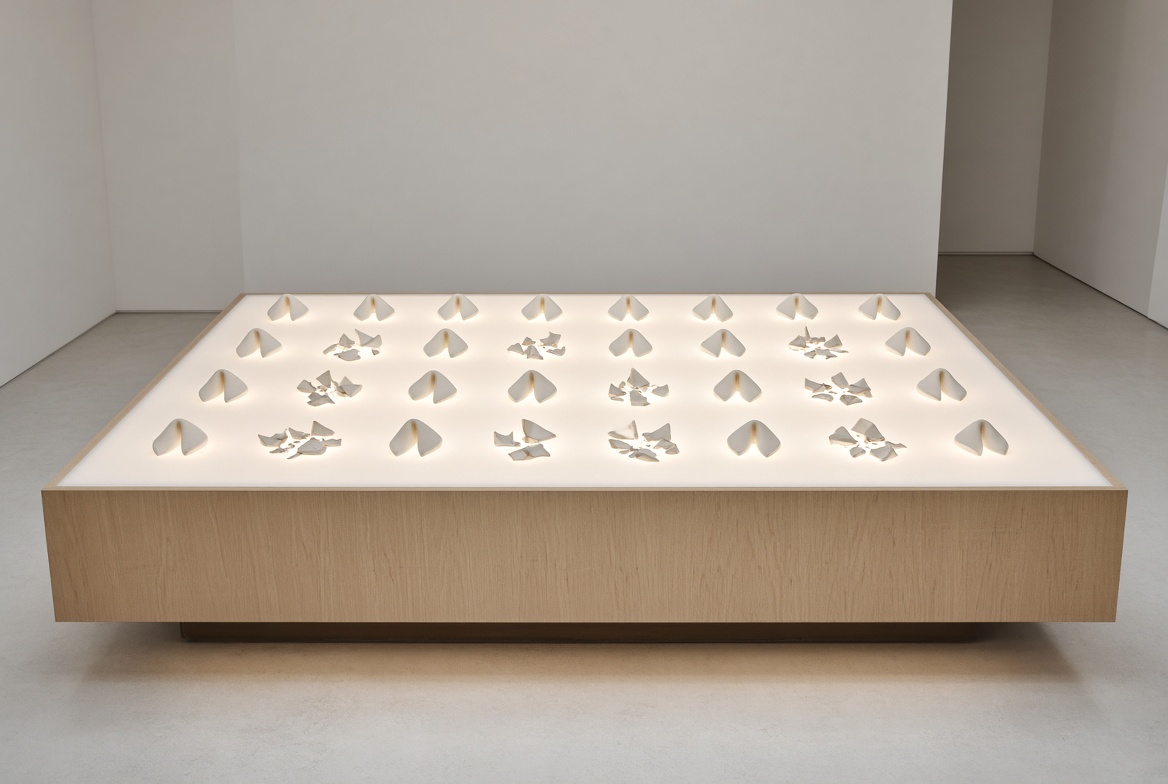
Some cookies intact. Some positions contain broken porcelain. Fragments remain where each object was broken. An irregular erosion pattern develops through the original grid. The work becomes a map of previous decisions.
State 03 — After
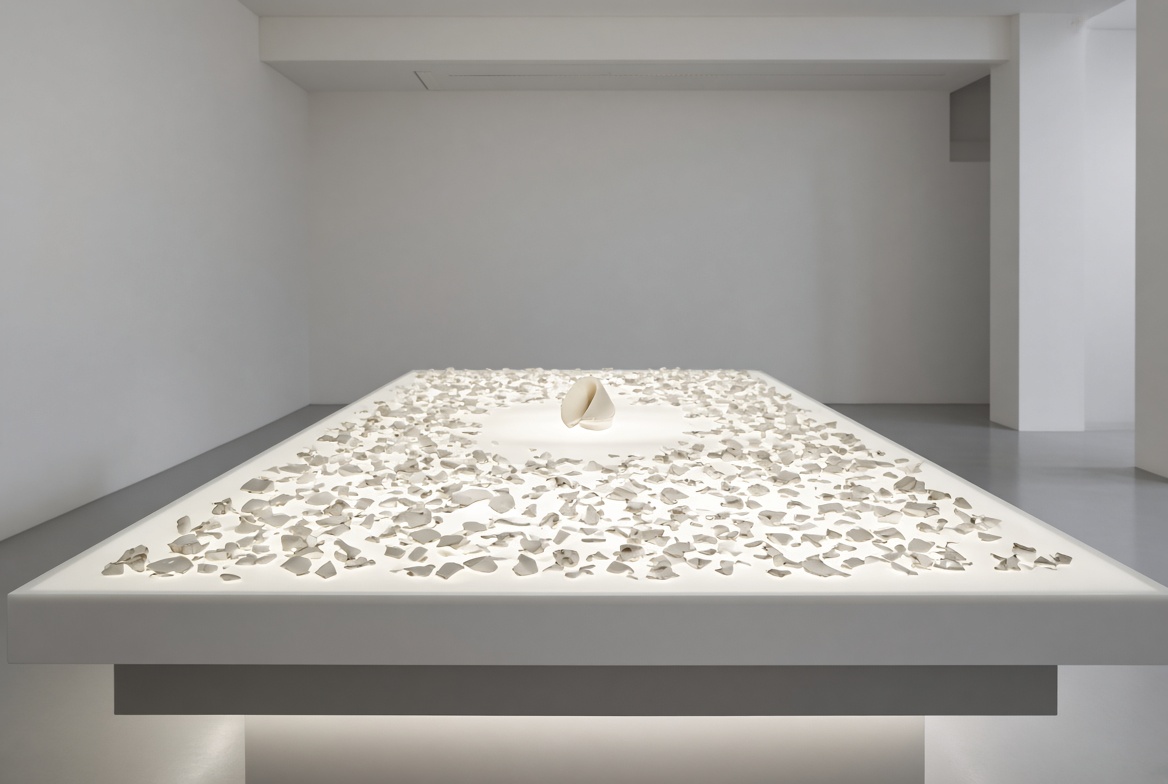
Almost everything has been broken. The original geometry remains perceptible through the distribution of fragments. The fortunes are gone. The gallery contains only the material residue of approximately 1,000 acts of choosing and knowing.
State 02 — During. Conceptual visualization. Fragments occupy the positions of the objects they were.
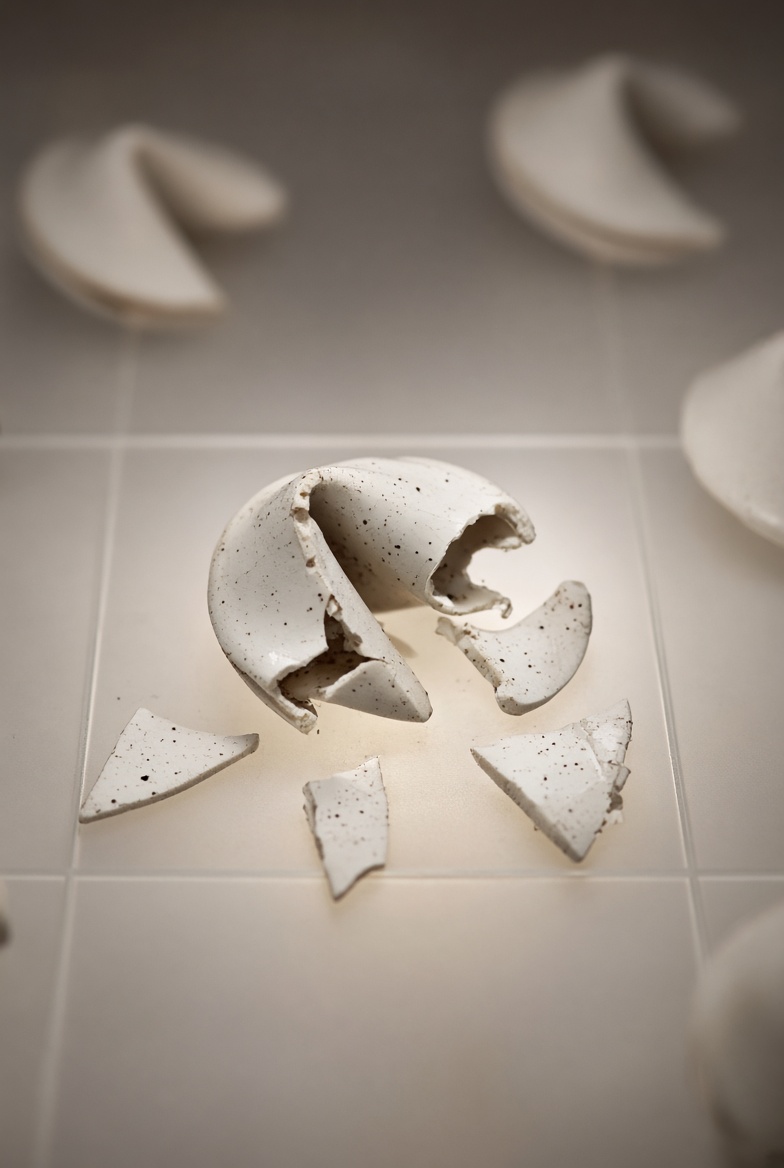
A position after use. The fortune has left. The porcelain has not.The last object. Choice has narrowed to one.
State 03 — After. Conceptual visualization. The geometry of the grid survives as residue.
Field as record
Before
1,000 possible choices.
During
The field becomes a map.
After
The fortunes are elsewhere.
The fortunes
Every fortune is unique.
You will lose something you intended to keep.
Someone will remember you incorrectly.
You will forget why something once mattered.
You will return somewhere and find it changed.
You will be forgiven without knowing it.
Someone you love will disappoint you.
You will disappoint someone you love.
You will mistake luck for a decision.
One of your photographs will outlive your memory of making it.
You will think about this again.
Among them
One of the approximately 1,000 fortunes is blank. The visitor who receives it has completed the entire ritual — choice, commitment, destruction, knowledge — and receives nothing. Or receives the most interpretable fortune possible.
The first visitor chooses from 1,000.
The last chooses from one.
1,000
Possible objects at the opening.
2
Then two remain.
1
The final participant has no choice at all.
The last object
Choice becomes inevitability.
A lottery is chance. Acceptance is what converts chance into fate.
The visitor’s choice is free and uninformed. At the beginning of the exhibition that freedom is wide. As objects disappear, the number of possible choices decreases. At some point the work crosses an invisible threshold. The last object is psychologically different from the first, though it was made the same way, placed in the same grid, and offered under the same sentence.
The installation therefore changes conceptually as well as physically.
Asymmetry
The valuable thing is destroyed. The cheap thing leaves.
The handmade object must be broken. The almost worthless piece of paper may leave the building.
By the end of the exhibition the gallery contains the physical evidence that approximately 1,000 people learned something, and retains no record of what they learned.
The fortunes have left in people’s pockets.
Only the consequences of knowing remain.
Practice
How badly do I want to know?
LOT continues an investigation that began with Objectophilia (Animals), 2018: a viewer standing in relation to an object that contains something, discloses something, and will not be the same afterward. The porcelain cookie must become desirable enough that destroying it produces hesitation. Desire is not the subject of the work. It is the resistance the work requires.
Material afterlife
The installation can reset. The material cannot.
After LOT I closes, the porcelain fragments could be collected and ground into grog. That material can be incorporated into the porcelain body used to create LOT II. Fragments from LOT II can become part of LOT III.
Future editions would physically contain previous editions. The grid can be laid again. The clay remembers the previous field as body, not as image.
This is a possible evolution of the work, not a condition of the first exhibition.
Material study. Intact body, broken body, grog, paper. The paper is the only part permitted to leave.
Lineage
Adjacent works, not sources.
LOT does not derive from any one of these works. They mark a territory in which destruction, participation, residue, and instruction have already been tested. The distinction is specific: LOT combines destruction, uninformed choice, advance consent, and information. The participant does not simply destroy or remove an object. They agree to an unknown outcome before learning it.
Clare Twomey — Consciousness/Conscience; Trophy
Ceramic fields completed by use. In one work the audience walks the objects into ruin. In the other the audience is permitted to take an object away. LOT splits those permissions: the paper may leave; the porcelain may not.
Felix Gonzalez-Torres — candy spill works
A dwindling field offered to the visitor. What leaves is consumable and replaceable. In LOT what leaves is unique and unrecorded, and what stays is wreckage.
Ai Weiwei — Sunflower Seeds; Dropping a Han Dynasty Urn
A multitude of handmade ceramic units; a single act of breaking a precious object. LOT holds both scales in one room, and assigns the breaking to the visitor under a sentence they accept first.
Yoko Ono — instruction works; Mend Piece
An action proposed in language, completed by a stranger. LOT’s instruction is a condition of taking, not a score for repair.
Atelier
Problems the work actually has.
LOT is a single installation with several material problems. An interdisciplinary studio can take those problems seriously without turning the work into a demonstration of collaboration.
The project crosses ceramics, industrial design, installation, lighting, fabrication, photography, documentation, writing, behavioral observation, and exhibition design. The questions are not thematic. They are practical.
What porcelain body and wall thickness produces the correct resistance before breaking?
How should the object break safely?
How does translucent porcelain behave under controlled illumination?
How should fragments remain visible without becoming a safety problem?
How does table height change participant behavior?
How quickly does the field transform with different visitor volumes?
A 30–50 object prototype should precede production of the full installation. The prototype is not merely technical testing. It tests the psychology of hesitation. If the object is not hard to break, the work has failed before the fortunes are written.